When to seek relationship counselling and how to bring it up with your partner
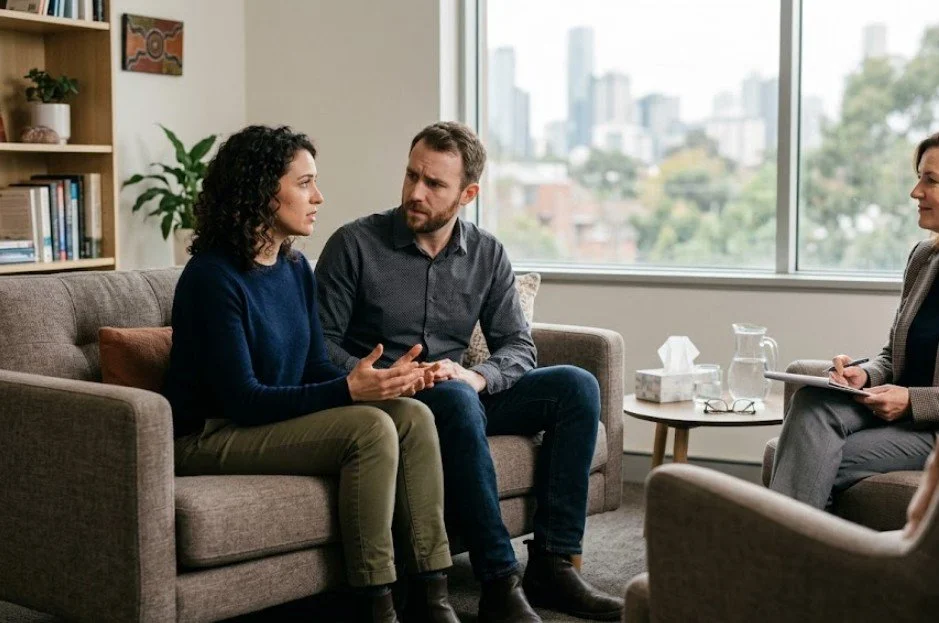
For many people, the idea of couples counselling sits in the back of their mind for a while before they say anything about it. In fact recent studies suggest anywhere from three years (Journal of Marital and Family Therapy) to six years (the Gottman Institute) where couples wait from the onset of serious relationship issues before seeking help. Either way it is a long time to let problems fester in your relationship, particularly when you consider healthy and strong relationships are fundamental to our emotional wellbeing and physical health.
Maybe you've noticed you keep having the same argument, stuck in the same old pattern of conflict. Maybe things aren't terrible — just a bit flat, a bit distant, not quite what they used to be. There may have been a crisis and or betrayal and you just can’t get past it. Or perhaps you feel more like housemates than partners, and life has become so busy since having children with both of you working that the relationship has slipped down the priority list. You're not sure when or how this has happened or more importantly how to get back to feeling more connected with each other.
Then the worries start to creep in – I want things to be better between us, but I not sure how to bring it up. What if my partner believes I'm pointing a finger at them? What if they get defensive and we end up in the same argument loop… again! Will they get the wrong idea and think I'm wanting out of the relationship?
These concerns make sense. There is a lot at stake, but actually when most people suggest counselling, it's usually because they're invested in trying to see if they can make the relationship work, not because they're ready to throw in the towel. It's like they're saying, "Hey, I care about us and I want to figure this out, or at the very least try….so let's get some help." They're not giving up, they're just looking for a way to navigate the tough stuff and come out with a more solid relationship and connection on the other side. They’re often looking to take the first step in making more time for ‘us”. I have seen many couples where the initial step in making time for “us” and committing to working on their relationship is simply finding space in their busy lives for a relationship counselling appointment - a place where they can make time to talk about the issues they have been avoiding or stuck in, and then the rest often grows from there.
Don't Wait for a Crisis
There's a common assumption that relationship counselling is for couples in serious trouble. I don't believe that's accurate. The couples I've seen who come in early, are proactive — before things have gone too wayward— often do well. Resentment hasn't become entrenched, and communication hasn't turned hostile or stopped all together.
People go to relationship counselling for many different reasons. Some want to reconnect with each other and themselves. Some are dealing with a lot of stress, like problems at work, taking care of kids, being sick, or going through a big change in life that they're not ready for, all of which can have a negative impact on the relationship. Some may want help with a betrayal, a breach of trust. Then there are those who just want to stop having the same fight every Saturday morning. It's important to remember that asking for help is not a sign of weakness, but often a sign of strength, courage and commitment.
Start with how you feel and what you want , not what’s wrong…..
Nobody responds well to feeling ambushed. " We need counselling because you never listen to me" is unlikely to go well. Starting with, as the Gottman institute suggests, a “soft start up” is better than “harsh” comments said in the heat of the moment. A softer approach tends to land better — something that starts from a place of love, care and curiosity. For example:
"I love us. I feel like we've both been carrying a lot lately, and I'd really want us to feel closer again, how would you feel about couples counselling?"
Or simply: "I don't want us to keep getting stuck in the same old patterns, I feel stuck and I would love it if we could get some support."
That shift — from what's wrong to how you feel and what you need/want — changes the whole tone of the conversation. It invites your partner to the conversation, rather than pushing them away.
Pick Your Moment
Don't try to bring this up mid-argument. When emotions are running hot is not the time to have the discussion; it is more likely then to come out as criticism or accusation.
Take a moment to yourselves, when you are both calm. Maybe go for a walk or grab a cup of coffee together. You're not trying to get someone to agree to something right away, you're just starting a conversation, opening the door to an idea. It's about taking that first step, being casual and low-key, and seeing where things go from there, planting a seed if you like.
Don't Panic if They Hesitate
Lots of people are nervous about counselling. They worry they'll be blamed or ganged up on. Or they fear that going there means the relationship is basically over.
If your partner seems unsure, don't take it as a no right away. I've seen lots of couples where one person was hesitant at first, but then usually get into it once they have a sense of what it was all about. Sometimes, people just need a little time to understand things before they're comfortable with them, being sceptical initially is totally understandable, particularly if it is an unfamiliar space.
Curiosity can help here. Something like: "I know this feels uncomfortable. It does for me too. I'm not looking for someone to take sides or back me up - I just think our relationship and connection deserves some attention."
Speak From Your Own Experience
Rather than diagnosing your partner, try speaking from where you actually are:
• "I've been feeling disconnected from us lately and I would love to feel more connected."
• "I'm worried we're drifting apart and I would love for us to feel more connected, on the same page."
• "I miss how things used to feel, I want to get the ‘us’ back."
• "I want us to have the strongest relationship we can."
These kinds of statements stimulate a conversation. Criticism tends to invite a defence.
What Couples Counselling Actually Looks Like
A lot of people imagine a therapist sitting in judgement — deciding who's right, who's wrong, who needs to change. That's not what I do.
Good couples counselling gives you space to reflect. It helps you slow down, make space and look at the behavioural patterns that have been holding you back. You get to hear each other in a new way and understand what's really going on for each of you. It's like taking a breath, so you can see things more clearly and figure out how to move forward together, so everyone’s needs can be met enough.
I'm not there to referee. I'm there to help couples understand themselves and each other more clearly — and to help them in responding in ways that are constructive, curious and kind. I aim to support you to have the conversations that you want and need to have. This includes talking to each other in a curious and caring way, and learning to listen with the same intent that you want to be heard.
Sometimes One Conversation Changes Everything
It often begins with a quiet chat at home for the many couples I've seen from Brunswick, Brunswick East, and other parts of Melbourne's inner north. This conversation usually starts with two people telling each other that their relationship is important to them. They're taking that first step, being honest, and it's not always easy. But it's a start, and it shows they care about what they have together.
You don't need to have hit rock bottom. You don't need all the answers. You don't need to prove anything is catastrophically wrong.
Sometimes saying something simple can be the most loving thing to do. Just telling someone "I care about us and I think we're worth getting some support" can make a big difference. It's a great way to show you're invested in your relationship and willing to work through tough times together.
In my experience, that conversation — awkward as it usually is — is often the beginning of a path to something better.